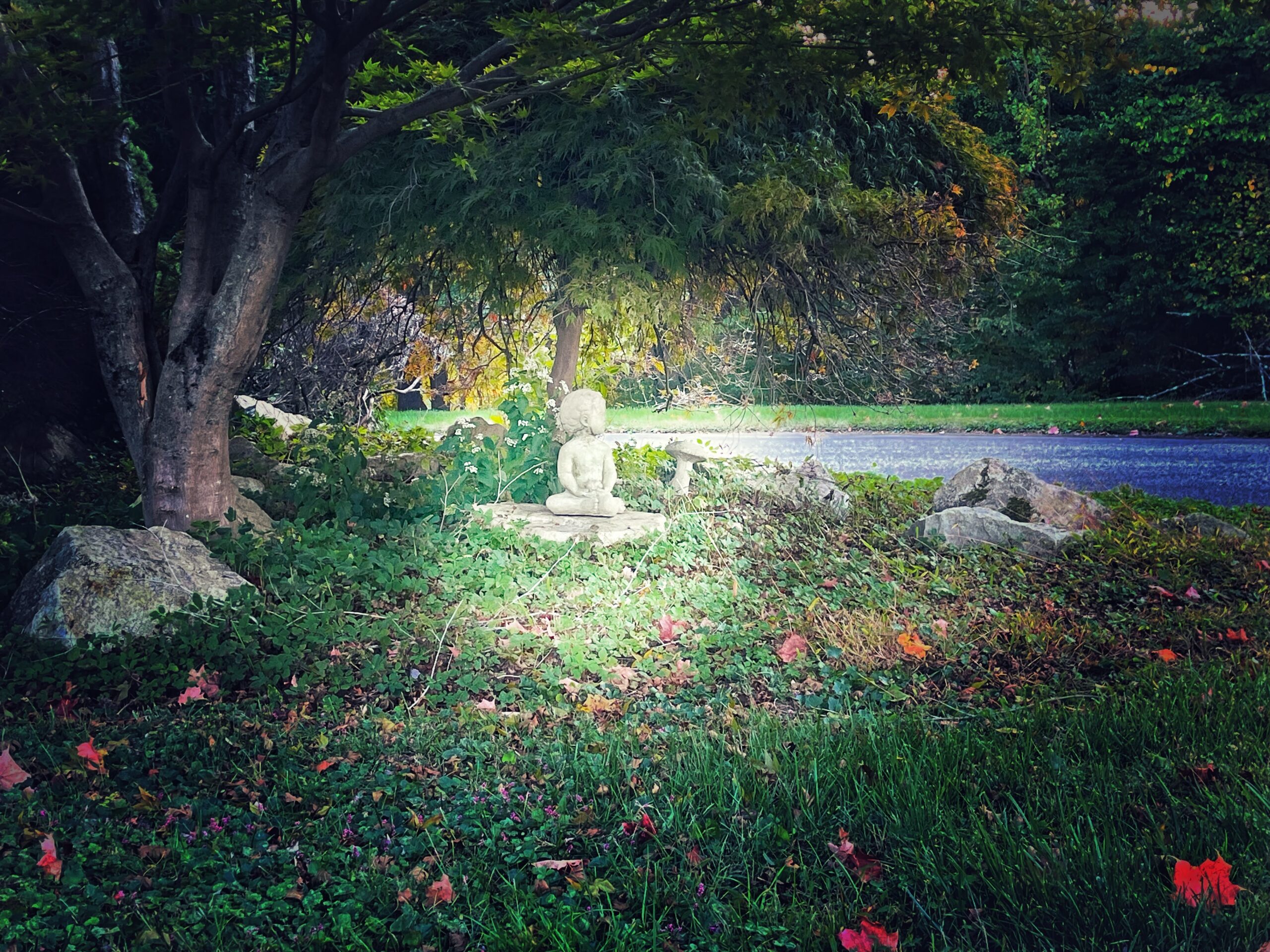
How many eleven-year-olds do you know who voluntarily spend their winter break meditating in silence? When I was eleven, I attended a five-day silent meditation retreat. I was the youngest participant to ever take part in this retreat, and although it certainly had its challenges, I learned and grew significantly from the experience. Choosing to sign myself up for a week of silence to confront my emotions was definitely an intellectual risk that I took, requiring courage, spunk, and determination.
The retreat was designed to be a very supportive, warm, and nurturing environment for deepening meditation practice. It took place in upstate New York near a gorgeous lake and surrounded by goats and trees. Check-in happened on Sunday afternoon, when participants were still able to speak as we settled into our cabins, socialized, ate dinner, and chose a spot in the meditation hall to build a “nest” (a small personal space made of cushions, blankets, and pillows on the floor or a chair where each person would sit for the duration of the retreat). That evening, silence was formally introduced through music and a heartfelt candle-lighting ceremony, which helped ease the transition into quiet and gave space to reflect on personal intentions. Once the retreat began, the silence became the entirety of the experience apart from the occasional guided meditation or morning davening session—no phones, no speaking or communication, not even through gestures, reading, or drawing. The only exception was communication to staff or teachers if something was needed. The silence left you alone with yourself, with nothing to distract you. Even though the retreat itself was peaceful and nurturing, my reason for being there was anything but that.
I made the choice to attend this retreat after a complex traumatic loss hit my family. I was a victim of sexual abuse by my stepfather, who committed suicide soon after the abuse came to light. The grief I experienced was overwhelming, and I felt utterly lost in the world. I was suffering from depression and anxiety, and I knew I needed relief from the heavy emotions weighing on me. Even though I didn’t quite know what a silent meditation retreat entailed, I knew my mother had positive experiences participating in them in the past. I asked her to find out if the retreat facilitators would make an exception for me, as a child, to join. Thankfully, they agreed.
Deciding to go on this retreat was definitely outside of my comfort zone and a risky undertaking. All of my friends, who know me as talkative, social, loud, and energetic, were shocked that I would willingly put myself in a situation requiring silence. Additionally, I had never done any type of meditation before, and I despised even the idea of it. I also didn’t know what it would be like to be the only child in a room full of adults. In truth, when signing up for this experience, I really didn’t know what to expect.
The first few sessions of meditation were extremely uncomfortable. My thoughts were so loud and restlessness overtook me. At the time, I didn’t think the experience would ever end; it felt endless and overwhelming. Still, there was something about the structure of the retreat and the commitment to simply staying present that made me feel, if only slightly, that I should continue, as though there might be something I didn’t yet understand waiting on the other side of the discomfort.
Despite the challenges, I persevered, and kept showing up for the meditation sessions. With time, I settled into the rhythm of the daily routine and began to feel a sense of peace within me. In the deafening silence, the deep-seated trauma in my body and mind finally had space to live. I began to feel more connected to myself and observed my capacity to hold difficult emotions, even though it wasn’t easy.
Believe it or not, a few months ago, I returned to the silent retreat for my fourth five-day meditation experience. Evidently, the intellectual risk I took at age eleven has had a lasting impact on my life. Even now, each time I arrive and the silence begins, I find myself questioning how I will make it through five days without speaking. But each time the retreat ends, I feel a sense of mourning that it is over. The experience is never easy, and it is not something that becomes effortless just because I have done it multiple times. Frustration, resistance, and emotional discomfort still arise each time.
However, what has changed is how I relate to those experiences. When I first attended at age eleven, I was overwhelmed and largely stuck in my head, needing the retreat as a safe and structured container just to be with my emotions without fully understanding how to do so. Now, I am much more able to stay present with what comes up rather than trying to escape my feelings or judge myself for them. I am less focused on how I am being perceived by others and more grounded in simply being myself within the practice.
Over the years, I’ve also developed a deeper curiosity toward meditation itself, experimenting with different approaches and beginning to genuinely find moments of peace and even joy within the practice. My emotional awareness has grown significantly, and I can now recognize and sit with feelings without becoming as consumed by them as I once was. In fact, others who have attended the retreat over multiple years have even commented that my presence feels different now, noting a shift from a younger, more guarded energy to something more grounded and immersed.
This year in particular, I experienced something especially striking at the end of the retreat: when I returned to everyday life, I felt almost disoriented, as if I had been reborn after my five days of silence. Although I struggled during the retreat with frustration about not feeling “deep enough,” I ultimately realized that the experience was not about forcing insight, but about allowing whatever came up to simply be there. That understanding reflects the biggest change between my first and most recent experiences: I no longer enter the retreat trying to escape myself or achieve a certain emotional state, but instead meet each moment with greater awareness, patience, and presence.
Immersing myself in meditation has helped me learn numerous mindfulness skills that I carry with me daily. The retreat has taught me to be more compassionate, both toward myself and others, which is a gift. I’ve also been shaped by the fact that I took that initial risk, which taught me that I am capable of being bold and brave.
Join the conversation!